
Most enterprise AI stops at the pilot. Fabric's designers and engineers build the workflows, controls and evidence that let it run inside real delivery, on real systems, under the governance an enterprise has to satisfy.

The pilot works. Then it meets the real systems, the auditors and the budget, and it stops. Three things account for most of it.

A demo shows the model can do the task once. It says nothing about the ten thousandth run, or how anyone would know it had gone wrong.

Risk, privacy and audit each need an answer the pilot was never built to give. Without those answers the work stays in the sandbox, however good it is.

Inference, evaluation, review and rework land after the business case is signed, on teams who never priced them.
The same four stages we have always run, with AI inside them rather than bolted on beside them.

Find the work where AI changes the economics, and say plainly where it does not.

Designers and engineers build it with agents in the loop, and leave your team able to run it.

Move the legacy estate that everything else depends on, without stopping the business to do it.

Keep it running, watch what it does in production, and fix what the evaluations catch.
Every consultancy can reach the same frontier models and the same coding tools, at roughly the same price, within roughly the same week. That layer is not where the difference lives.
What we have built around it is what we call the Fabric Harness: the workflows that break a piece of work into steps an agent can be trusted with, the skills that carry our delivery standards into those steps, the evaluators that check the output before a person ever sees it, and the governance gates that decide what ships and what comes back to a human.
It is built from what we learned delivering for regulated clients, it improves every time we use it, and it is the reason our AI work survives contact with an audit. Swap the model underneath and the harness still holds.
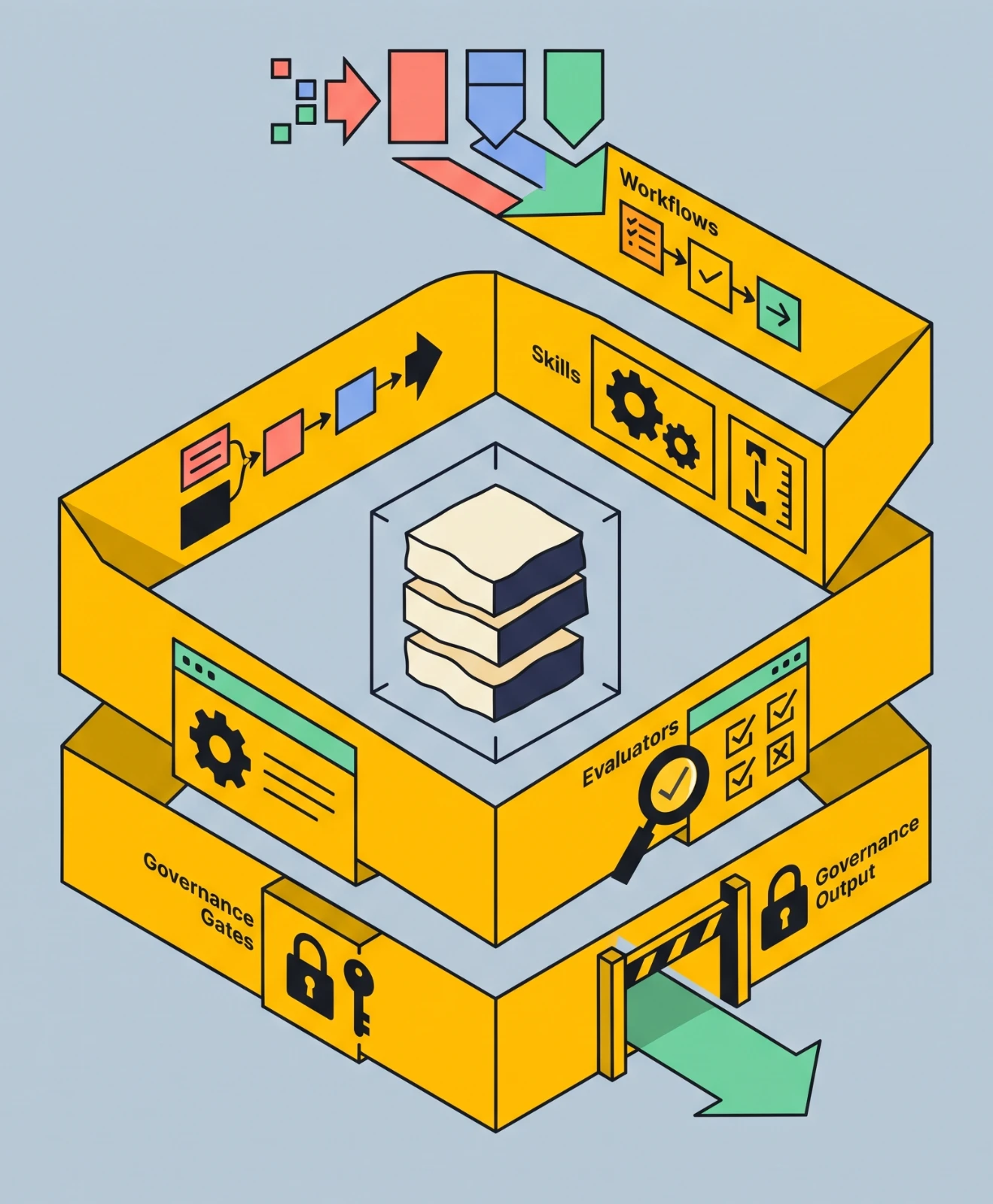
AI work in a bank, an insurer or a government agency has to answer to the same controls as everything else. We build to that from the start rather than retrofitting it at the review.

Fabric holds ISO 27001 certification for information security management.

Our AI management practices are built to the structure of the AI management system standard. We are not certified against it.

Engagements are designed so your obligations under CPS 230 and CPS 234 can be evidenced, and so the Privacy Act and the Voluntary AI Safety Standard are accounted for in how the work runs.
The clearest evidence is in legacy modernisation, where the work is measurable and the stakes are obvious.
Less time to understand an undocumented legacy codebase, using agents to read and map what nobody left notes on.
Less effort to migrate it, with the same engineers reviewing every change that ships.
Delivering into regulated Australian enterprises, which is where the governance in the harness came from.
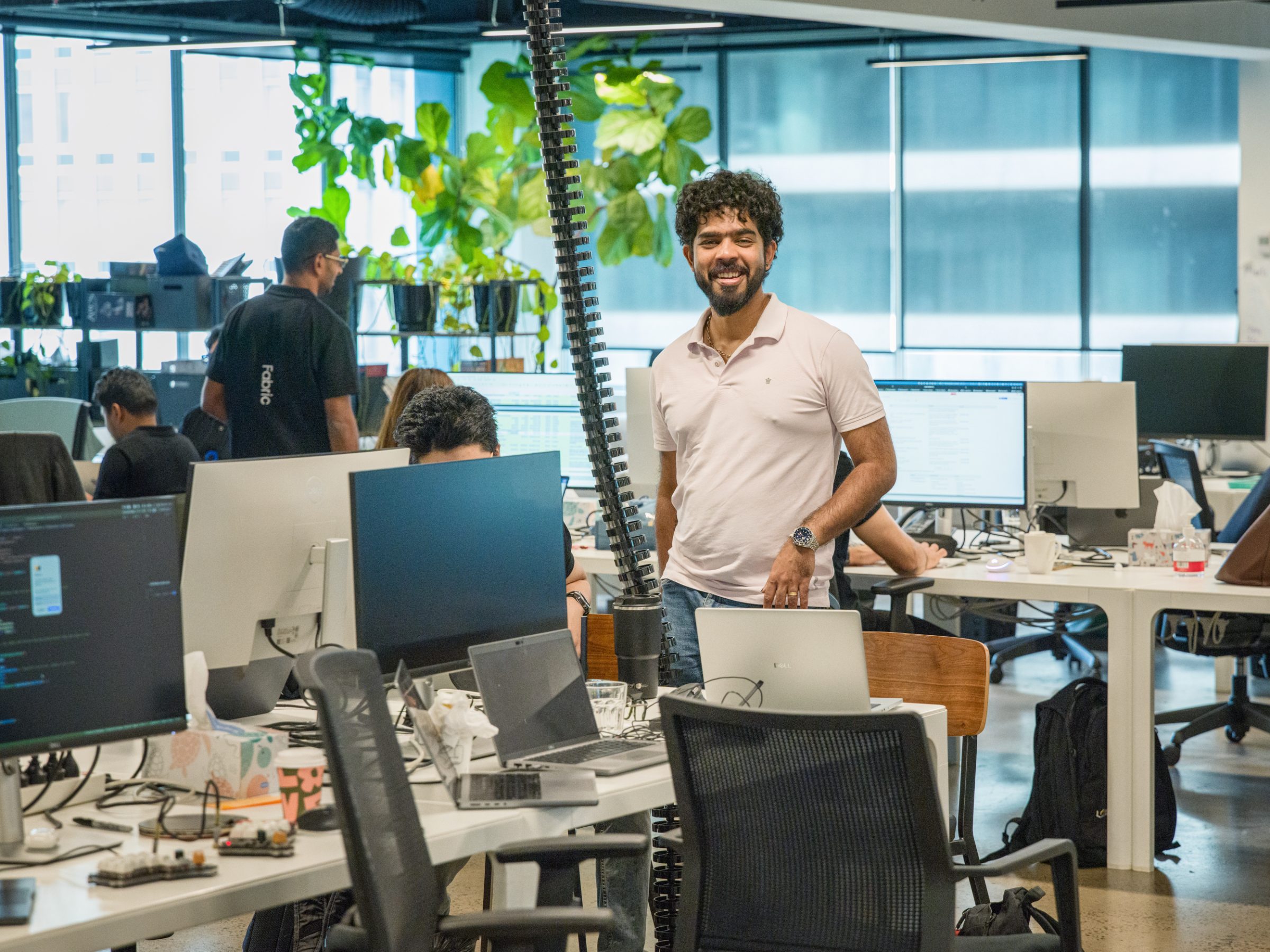
The harness is how we deliver today. Some of it is general enough that clients keep asking whether they can run it themselves, and we are working out which parts those are.
There is nothing to buy and no date to announce. If you want a say in what we build first, tell us where you would point it and what is actually in your way. We read every response and we will come back to you within two business days.
Have a say in what we build first
Register your interest Proof
Proof Sign-off
 Cost
Cost



.svg)

.png)